




.jpg)






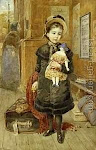




 Dagmar / Maria Feydorovna by Kramskoj
 (26 November 1847 – 13 October 1928)
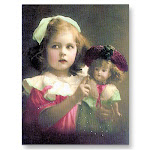
 Princesses Alix and Dagmar of Denmark.
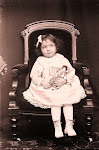
 "Young Dagmar"
One of the most tragic figures of European royalty is the Empress Maria-Feodorovna, widow of Alexander III, and mother of Nicholas II of Russia. She was born to be Princess Dagmar of Denmark and later became Empress consort of Russia spouse of Emperor Alexander III.
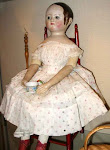
 " Countess Dagmar" exquisite Kister parian doll.
 Charcoal sketch ca. 1880
Born in Copenhagen she was baptized into the Lutheran faith. Her father became King of Denmark in 1863 on the death of King Frederik VII.
Dagmar and her siblings, including Alexandra, became consorts to royal houses throughout Europe and Russia and this formed the basis of alliances for culture, industry and war throughout the 19th and 20th centuries. Alexandra married Edward, the Prince of Wales, while Dagmar attracted the attention of her Russian cousin resulting in her marriage to the Grand Duke Alexander Alexandrovich of the Romanov family in Russia.
Dagmar and her siblings, including Alexandra, became consorts to royal houses throughout Europe and Russia and this formed the basis of alliances for culture, industry and war throughout the 19th and 20th centuries. Alexandra married Edward, the Prince of Wales, while Dagmar attracted the attention of her Russian cousin resulting in her marriage to the Grand Duke Alexander Alexandrovich of the Romanov family in Russia.

Dagmar and her sister Alexandra.
 St. Petersburg ca.1879
 Conta Boehme shoulderhead.
These alliances caused shudders Germany, and soon after, war was orchestrated against Denmark developing an unending hatred of a very powerful family and its children and grandchildren including the leaders of England (George V) and Russia (Tsar Nicholas II).
 Young Maria, and the later fateful Tsar Nicholas II.
 Maria Fyodorovna Empress of Russia.
 Alexander III
Following Romanov court custom, Dagmar adopted the Orthodox religion under the name of Maria-Fyodorovna, after which Alexander and the newly baptized Maria were married in a sumptuous ceremony in St. Petersburg.
 "Minnie" as Maria was affectionately known as, with her children.
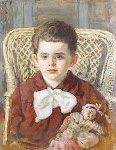
  Possibly "Conta Boehme" china.
 Young Empress Dowager.
 Family portrait.
 "The Empress Dowager"
She was pretty and popular. Preferring the more social side of her position, she brought an enormous degree of elegance to the Russian court.
Maria-Fyodorovna was a devoted, doting mother who spoiled her children. She refused to let her five surviving children to grow, particularly her eldest son, the future Nicholas II. Consequently, the imperial children were completely unprepared for the role history had in store for them. Tsarevich Nicholas was most unsuited for the role of Tsar of Russia, a reality expressed by Nicholas himself soon after his father's death when he lamented "what is going to happen to Russia?....I am not prepared...I know nothing of the business of ruling."
Maria-Fyodorovna was a devoted, doting mother who spoiled her children. She refused to let her five surviving children to grow, particularly her eldest son, the future Nicholas II. Consequently, the imperial children were completely unprepared for the role history had in store for them. Tsarevich Nicholas was most unsuited for the role of Tsar of Russia, a reality expressed by Nicholas himself soon after his father's death when he lamented "what is going to happen to Russia?....I am not prepared...I know nothing of the business of ruling."
 "Countess Dagmar" Kister china shoulderhead ca. 1870
 Beautiful Conte Boehme "Countess Dagmar" ca. 1870
 Emperor Alexander, and Empress Dowager Maria Fyodorovna.
 Coronation at the Kremlin in Moscow ca. 1883
 Gatchina Palace
Alexander and Maria were crowned at the Kremlin in Moscow on 27 May 1883. Just before the coronation, a major conspiracy had been uncovered, which cast a pall over the celebration. Because of the many threats against Maria and Alexander III, they were urged to relocate to Gatchina Palace, a more secure location, 50 kilometres outside St.Petersburg. Their reign came to an abrupt end when the Tsar suffering from a debilitating disease, was unable to fight it and succumbed to his death on November 1 1894. It was then that his reign ended and Nicholas’ began.
The Imperial court was still in mourning for the death of Tsar Alexander III. It was not an auspicious beginning for the new reign.
The Imperial court was still in mourning for the death of Tsar Alexander III. It was not an auspicious beginning for the new reign.
 Princess Victoria, Queen Alexandra, and Empress Maria Fyodorovna.
 Alexandra, and Dagmar / Maria Fyodorovna ca. 1903
 Countess Dagmar parian doll.
 Maria Fyodorovna and her son Nikolai on happier days.
Nicholas II married Alix of Hesse and by Rhine (Queen Victoria of England granddaughter) later to be Alexandra. Alix carried the gene for the "royal disease" (hemophilia), which their only son and heir was born with. This brought Nicholas and Alexandra closer to each other, but separated them from the Russian people and the Imperial family, including her powerful mother-in-law The Empress Dowager Maria Feodorovna.
Ultimately, this seclusion resulted in rumors and discontent grew in the country ending with the assassination of the royal family during the Bolshevik revolution.
 Maria received reports that her sons, her daughter-in-law and her grandchildren had been murdered. In her diary she comforted herself: "I am sure they all got out of Russia and now the Bolsheviks are trying to hide the truth." She firmly held on to this conviction until her death.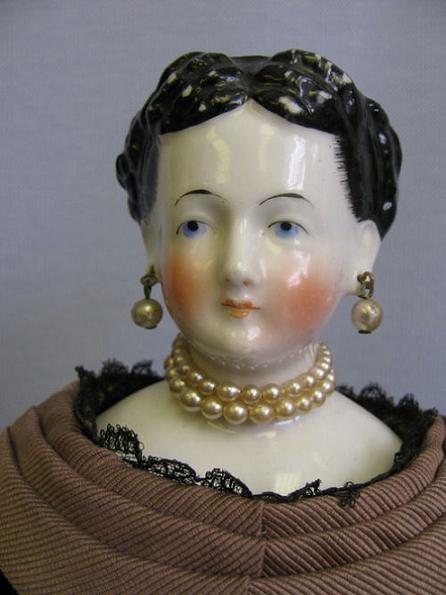
 After a brief stay in the British base in Malta and later London, she returned to her native Denmark, where she died at age 80 in 1928.


