










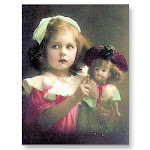


 "Grandma's House"
Over the river and through the woods
To Grandmother’s house we go
The horse knows the way to carry the sleigh
Through white and drifted snow.
To Grandmother’s house we go
The horse knows the way to carry the sleigh
Through white and drifted snow.
**********************************
~ The Mayflower ~

The Mayflower was the ship that transported the English Separatists, better known as the
Pilgrims, from a site near the Mayflower Steps in Plymouth, England, to Plymouth, Massachusetts, (which would become the capital of Plymouth Colony), in 1620. There were 102 passengers and a crew of 25–30.
Pilgrims, from a site near the Mayflower Steps in Plymouth, England, to Plymouth, Massachusetts, (which would become the capital of Plymouth Colony), in 1620. There were 102 passengers and a crew of 25–30.

The vessel left England on September 6, 1620 (Old Style )/September 16 (New Style), and after a grueling 66-day journey marked by disease, which claimed two lives, the ship dropped anchor inside the hook tip of Cape Cod (Provincetown Harbor) on November 11/November 21. The Mayflower was originally destined for the mouth of the Hudson River, near present-day New York City, However, the Mayflower went off course as the winter approached, and remained in Cape Cod Bay. On March 21/31, 1621, all surviving passengers, who had inhabited the ship during the winter, moved ashore at Plymouth, and on April 5/15, the Mayflower, a privately commissioned vessel, returned to England.
*******************************************
~ The Pilgrims ~
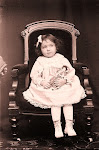
 The Children of William White (Circa 1848) Descendants of Mayflower Passengers William and Susanna White.
*********************************************

 Pilgrims Landing at Plymouth Rock


~ The First Americans, The Natives ~


 Audubon Plate "Wild Turkey Male"
The Mayflower has a famous place in American history as a symbol of early European colonization of the future US. With their religion oppressed by the English Church and government, the small party of religious Puritan Dissenters who comprised about half of the passengers on the ship desired a life where they could practice their religion freely. This symbol of religious freedom resonates in US society and the story of the Mayflower is a staple of any American history textbook. Americans whose roots are traceable back to New England often believe themselves to be descended from Mayflower passengers.

Pilgrims (US), or Pilgrim Fathers (UK), is a name commonly applied to early settlers of the Plymouth Colony in present-day Plymouth, Massachusetts, USA. Concerned with losing their cultural identity, the group later arranged with English investors to establish a new colony in North America.
 Pilgrims Landing at Plymouth Rock

The colony, established in 1620, became the oldest continuously inhabited British settlement and the second successful English settlement (after the founding of Jamestown, Virginia in 1607) in what was to become the United States of America.

The Pilgrims' story of seeking religious freedom has become a central theme of the history and culture of the United States.
******************************************~ The First Americans, The Natives ~


Squanto, a Patuxet Native American who resided with the Wampanoag tribe, taught the Pligrims how to catch eel and grow corn and served as an interpreter for them (Squanto had learned English while enslaved in Europe and during travels in England).

Additionally the Wampanoag leader Massasoit had caused food stores to be donated to the fledgling colony during the first winter when supplies brought from England were insufficient. The Pilgrims set apart a day to celebrate at Plymouth immediately after their first harvest, in 1621.
 Audubon Plate "Wild Turkey Male"
*****************************************
~ Thanksgiving ~
 "Emptying the Horn of Plenty"
*************************************
And although it be not always so plentiful as it was at this time with us [when we were back in England], yet by the goodness of God, we are so far from want that we often wish you [our English brethren] partakers of our plenty.

 "Freedom From Want" Norman Rockwell

 This celebration occurred early in the history of what would become one of the original Thirteen Colonies that later were to become the United States. It was modeled after harvest festivals that were commonplace in Europe at the time, and was continued in later years; First as an impromptu religious observance, and later as a civil tradition.
 George H. Boughton's "Priscilla and John Alden", ca. 1884.


 "First Thanksgiving"
~ Thanksgiving ~
 "Emptying the Horn of Plenty"
*************************************
A contemporary account written by colonist Edward Winslow showed the assembled to be content with their lot:
And although it be not always so plentiful as it was at this time with us [when we were back in England], yet by the goodness of God, we are so far from want that we often wish you [our English brethren] partakers of our plenty.

While not the first thanksgiving of any sort on the continent, the traditional origin of modern Thanksgiving in the United States is generally regarded to be the celebration that occurred at the site of Plymouth Plantation, in Massachusetts in 1621.
 "Freedom From Want" Norman Rockwell

 This celebration occurred early in the history of what would become one of the original Thirteen Colonies that later were to become the United States. It was modeled after harvest festivals that were commonplace in Europe at the time, and was continued in later years; First as an impromptu religious observance, and later as a civil tradition.
 George H. Boughton's "Priscilla and John Alden", ca. 1884.

At the time, this was not regarded as a Thanksgiving observance; harvest festivals existed in English and Wampanoag tradition alike. Sporadic national, regional and individual Thanksgivings followed, after favorable events and days of fasting after unfavorable ones.

In the Plymouth tradition, a thanksgiving day was primarily a church observance, rather than a feast day.
 "First Thanksgiving"
******************************************
 Thanksving Day in a Civil War Camp by Winslow Homer


 "Want" by Norman Rockwell

The first Thanksgiving Day proclamation in the newly established constitutional republic, was delivered by His Excellency, President George Washington in 1789, following the precedent set by the Continental Congress in setting the date on the last Thursday in November.
 Thanksving Day in a Civil War Camp by Winslow Homer


Thanksgiving did not become an annual, national holiday until 1863. Americans were waging the Civil War, and in the midst of it President Abraham Lincoln, proclaimed a national day in which to express thanks for the many blessings enjoyed by Americans, e.g., natural resources and population growth, despite the military conflict.

It wasn't till later in the 19th century, though, that the popular image of the "First Thanksgiving" took root. Earlier, while the Indian Wars were still raging, scenes of settlers and natives engaging in joint revelry seemed inconceivable.
 "Want" by Norman Rockwell

Preparations for a Thanksgiving Feast ca. 1930's


 In 1939, during the Great Depression, President Franklin Delano Roosevelt famously modified Lincoln's chosen date of the last Thursday of November to the second-to-last Thursday of November in order to extend the post-Thanksgiving, pre-Christmas shopping season. The move was met with confusion and criticism, and in 1942 FDR signed a law making Thanksgiving the fourth Thursday of November, a law which is still in effect today.
 Fort Klock Historic Restoration
"Happy Thanksgiving" From Cameo, a magazine for women, November 20, 1978.
 Thanksgiving by Norman Rockwell

HAPPY THANKSGIVING EVERYONE!!!!!


 In 1939, during the Great Depression, President Franklin Delano Roosevelt famously modified Lincoln's chosen date of the last Thursday of November to the second-to-last Thursday of November in order to extend the post-Thanksgiving, pre-Christmas shopping season. The move was met with confusion and criticism, and in 1942 FDR signed a law making Thanksgiving the fourth Thursday of November, a law which is still in effect today.
 Fort Klock Historic Restoration
"Happy Thanksgiving" From Cameo, a magazine for women, November 20, 1978.
 Thanksgiving by Norman Rockwell

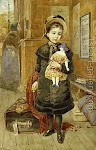
Over the river, and through the wood, to Grandfather's house away! We would not stop for doll or top, for 'tis Thanksgiving Day.
HAPPY THANKSGIVING EVERYONE!!!!!


