





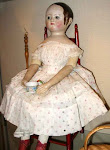
.jpg)











 "T'ang Dynasty" glazed pottery horse

In 1998, a German company was given permission to excavate the wreck of a 9th-century Arab trading ship that was discovered off the coast of the island of Belitung in Indonesia. It proved to contain an archaeological treasure trove.
With the wreck of the sunken vessel were found 60,000 pieces of rare Chinese porcelain. The collection became known as the Tang Treasure. The Tang Treasure was identified as having been produced in kilns in what is now the Chinese province of Hunan. It was probably intended for export to Malaysia, India and Arabia.
The Tang Treasure includes blue and white porcelain, tricolored glazed pottery from the Tang dynasty, and three early Qinghua plates, the best preserved of their kind ever found. Inscriptions found on some of the pieces suggest that the pottery was produced and transported in the early 9th century, and carbon dating has confirmed this.
 T'ang white glazed porcelain ewer

 T'ang porcelain ewer
 Hard-paste or "true" porcelain originated in China during the T'ang dynasty (618-907 A.D.).Early Chinese porcelain consisted of kaolin (china clay) and pegmatite, a coarse type of granite. Porcelain was unknown to European potters prior to the importation of Chinese wares during the Middle Ages.
 Kister china shoulder head
Europeans tried to duplicate Chinese porcelain, but, unable to analyze its chemical composition, they could imitate only its appearance. European craftspeople tried combining clay and ground glass. These alternatives became known as soft-paste, glassy, or artificial porcelains. Finally In 1707 they succeeded by combining clay with ground feldspar instead of the ground glass previously used.Later in the eighteenth century the English further improved upon the recipe for porcelain when they invented bone china by adding ash from cattle bones to clay, feldspar, and quartz.
KPM Berlin porcelain painting plaques:
 “The Melon Eaters” after a painting by Murillo, with two boys seated next to a basket of fruit, one boy eating a slice of melon with his companion and a dog looking on.
 A porcelain painting of rectangular form, the body with the polychrome painted scene "Niobe" the reverse side with title, on the lower right signed: L. Enk, KPM-Berlin, impressed sceptre and K. P. M., H, 1908 (Ru)
"Niobe," Greek Mythology. In the above scene, Apollo and Artemis revenge the insult to Leto by slaughtering Niobe's 12 children, the Niobids, with their arrows and petrifying Niobe in the form of a rock in the Sipylos Mt. where since then her tears are said to gush forth.
The China Dolls:
 Although porcelain is used as a synonym for china, the two are not identical. China, also known as soft-paste or tender porcelain, is softer: it can be cut with a file, while porcelain cannot. This difference is due to the higher temperatures at which true porcelain is fired. Due to its greater hardness, porcelain has some medical and industrial applications which china, limited to domestic and artistic use, does not. Moreover, whereas porcelain is always translucent, china is opaque.
 "The Ernest Fiedler family" Heinrich ca. 1850
 Kister china lady head ca. 1840 The hair is softly waved on the sides of the head and pulled into a bun on the back of the head.
 KPM boy has a side part in his hair, the nose turns up slightly on the end. ca. 1840-1844

Throughout recorded history, images of women far outnumbered images of men. Busts and statues of ancient Greece and Roman women dominate art museums. In the doll world, dolls representing women outnumber their male counterparts.
 "A Night at the Opera" Margaret Whitton Collection ca. 1840
Although bone china is fired at lower temperatures than true porcelain, the bone ash enables it to become translucent nonetheless. Because it is also easier to make, harder to chip, and stronger than hard porcelain, bone china has become the most popular type of porcelain in the United States and Britain (European consumers continue to favor hard porcelain).
 Old broken raw model (front and back) from which the doll featured below, "Miss Liberty" could be identified.
Reflection shows hair lavishly styled at the back of the head and entwined with a black hair band.
 This doll because of the similarities with the head of the Statue of Liberty in New York is called "Miss Liberty" Shoulder head made of very pale bisque - hair style adorned with a gold luster diadem ca. 1875
  The Herwig porcelain factory in Katzhutte, Thuringia. The building on the left is filled with large holes, from which scavengers have pried Hertwig plaster molds to make reproduction porcelain products.
 Chinese porcelain represented wealth and taste in 17th century Europe. Augustus the Strong of Dresden and Meissen in the German state of Saxony, sponsored the research into the development of white porcelain similar to that imported from China in the early 1700s. Meissen used the Chinese method of a single firing by glazing the initially formed piece and then firing the combination at 1350 degrees C. Meissen was in commercial production by 1713. and by the 1720s the enamels and detail style of Meissen fully developed.
 Meissen Face


Style of the porcelain was borrowed from the original Chinese, from paintings by Watteau, court scenes, landscapes, flowers etc. While the recipe was a closely guarded secret, as all secrets, it was soon leaked. In order to identify the original Meissen products, Meissen developed markings that initially were painted on, but were soon fired in underglaze blue. Early markings were eventually replaced by the crossed swords logo. Introduced in 1720, it was used consistently after 1731 by official decree. Variations in the "crossed swords" logo allow approximate dating of the wares. Caution must be exercised, as Meissen is one of the most copied porcelains.

 The lady's head features a long, swan-like neck, brown down cast painted eyes, distinct dimples in chin and highly blushed cheeks, and the palest of cream colored wavy hair, off the shoulder and neck, with a very high forehead, almost in the style of Elizabeth the First of England.

One usually finds these heads as objects other than complete dolls, so it is rare to find one complete and assembled as an actual doll such as we find these examples. They have very nice firmly stuffed muslin bodies, long delicate porcelain arms with elegantly detailed blushed fingers and individual fingernails, and most intriguingly, the most unusual ( if not even bizarre ) molded white china boots with blue striped patterns with slightly raised heels and painted brown soles.
 The immovable shoulder heads of Nymphenburg dolls have a peculiar hair style, high forehead with downward looking eyes and a touch of an amusing smile. Their placid countenance reminds me of figures from a manger scene.
Dresden:
 Beautiful Volkstedt, Dresden figure group
Today this action remains one of the more controversial Allied actions of the Western European theater of war.
 Nymphenburg China ca. 1901
 Very rare Blanc de Chine
The single key point in identifying products from one of these three companies is they always marked their products. KPM Berlin, KPM Meissen and Royal Copenhagen porcelain dolls are always marked with the company signature. If a doll is unmarked then it was not made by one of these companies.


