





.jpg)


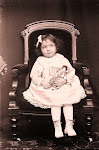


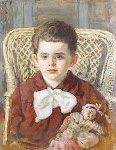


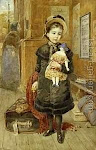


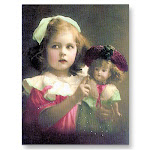


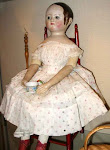
 During the Victorian era and into the early 20th century the history of dolls was connected with the lives of the middle class and wealthy children who would have owned them. Its my purpose in creating this blog to portray dolls which mark the stages of developing history. But regrettably, of the Victorian period, only a few items remain from the rag and bone toy box of the very poor. Underprivileged children of the time, were forced to make do with whatever lay at hand; A mutton bone, wrapped in a rag, would make a much loved doll for a poor child.
As doll-making art is predominantly from the Victorian and Edwardian periods, these dolls are the more procurable by collectors. Mass production methods were becoming commonplace by the end of the century, so a large number of dolls of all different types were surfacing at the same time.
In this post I will show only samples of China, and Bisque including the beautiful French Bebes, and Fashion Dolls. All of these dolls will be covered individually in later chapters including their makers.
For now, my objective is to show that these dolls were available at the time of Queen Victoria’s reign, but only to the very wealthy.

"Dollmaker"
Wax Dolls
In addition to wooden dolls, wax dolls were popular in the 17th and 18th centuries, and they were also a contemporary of the papier mâché doll. . Munich was a major manufacturing center for wax dolls, although the earliest wax dolls found by collectors tend to be the poured wax dolls made in England. This was after the demise of the wooden doll industry from 1840 through the remainder of the 19th century. Although pressed wax dolls were made before this time for the very wealthy.
 Beautiful "Pierotti Poured Wax Child Doll" ca. 19th century
 English Poured Wax early 19th century
 French Wax Infant Doll mid 19th century
 Family of Queen Victoria by Franz Xaver Winterhalter
The Young Queen Victoria became a symbol of the 1840’s subdued and dove-colored decade. She spent her time most domestically filling the palaces with nurseries. It was in this quiet and rather dowdy atmosphere that the early porcelain dolls made their debut.
 Conta Boheme China doll ca. 1870. Elaborately styled hair. Wears hand-sewn lawn white dress with antique lace.
 Kestner China Doll with "Covered Wagon" hairstyle from my own collection... ca. 1860. Original antique dress, original cloth body with individually stitched fingers.
 Germany, France and Denmark started creating china heads dolls in the 1840's they are often identified by their hairstyles.
 Hertle and Schwab China Doll "Lowbrow Hairstyle" ca. 1890
 Child portrait with a "Lowbrow "China head doll ca. 19th century
 Parian Dolls
If there is no color added to the bisque and it is left white and unglazed, the doll is sometimes referred to as a "Parian" doll.
 Alt Beck Gottschalk...Lady Parian with Blue Scarf. Antique lace dress, pierced ears ca. 1880
 Baby Stuart by Gebruder Heubach ca. 1910. Molded white bonnet, original white organdy gown.
 Elegant Alt Beck Gottschalk Lady Parian ca. 1880
The best known group of antique dolls are the German and French bisque dolls. Bisque, which is fired twice with color added to it after the first firing, looked more like skin than china.
 Simon and Halbig on a K*R composition body
 Beautiful Kestner Doll ca. 19th century
 K*R Doll, Simon and Halbig bisque head
 Sunday Visit...German Bisque Doll
 Victorian Girl Portrait ca. 19th century
 The years from 1860 through 1890 were dominated by fashion dolls. These dolls were made to represent ladies, and they were dressed in exquisite, elaborate reproductions of current fashions.
 Collection of French Fashion Dolls from the Carmel Doll Shop
 Bru French Fashion with a wood body courtesy of Thierault
 Victorian French Fashions...by Huret, Jumeau and Bru
 French Bebes...Bru and Jumeau
 Young Girl and Her Doll...Emile Mullier
 ...with Bru doll
  Asian Dolls Vignette by Bru... French Bebes ca. 19th century
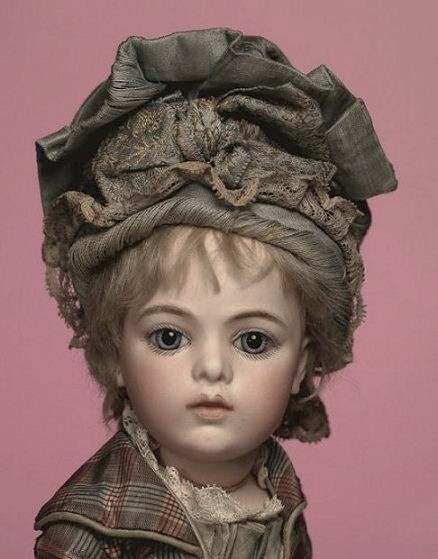 Stunning Bru Bebe, notice the huge almond shape eyes. Jumeau and Bru dolls are noted for their beautiful faces. ca. 19th century French Bebe.
 Bebe Jumeau ca. 1880
 Remple and Breitung, Sonnenberg Germany ca.1890

